My apologies to everyone for my disappearing! What a long hiatus. I’ve got to say, the events in our world have compelled a lot of my attention, along with regular work duties, staying in touch with my kids, volunteering with a local organization, and finishing a book.
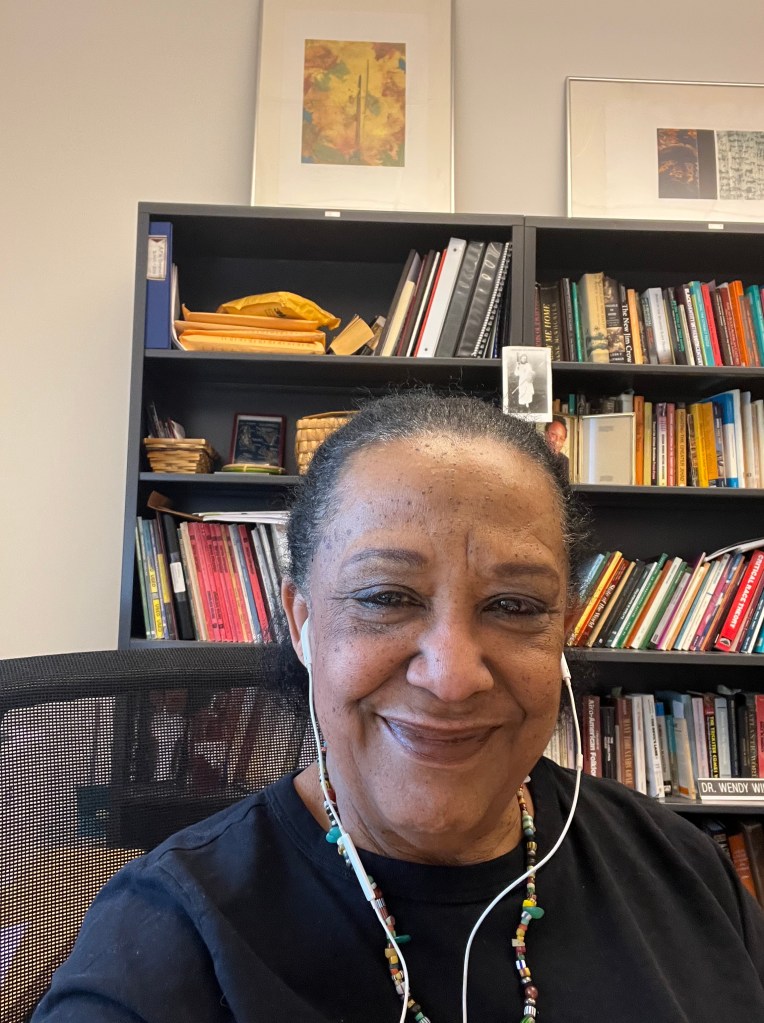
A shout out to all my peeps in D.C. There has been a lot of activity over the last couple of days. Shout out to QueSton, to Malik, to Rodney, to Dera, to Diane, to Roy, to Luidgi and Alice, and a lot of other folks. As it happens, the book I have been working on is a memoir about D.C. and growing up in the community tied to Howard University, to Rock Creek Park, to Columbia Road, to Georgia Avenue. The short vignettes I am going to post over the next few weeks come from the process of writing that memoir. I hope you enjoy them!
I will also be building a presence on SubStack in the next few months. Keep in touch and join me in this new adventure. Let’s start with the short vignette below:
SHORT STORY OF TWO GIRLS IN D.C.
What is there to say about that?
PART ONE
If we wanted to talk. If we would talk. Not as a ‘study,’ but as a memory, as in ‘how would you recall it?’ Washington, D.C., then. And youth, then. I mean, warm nights with humid breezes borrowed from somewhere else, it seemed. Dancing because your life did depend on it. Different ages stuck together and defended themselves from incursions from below or from above. People were territorial, but at first not over drugs. People were territorial over territory … their neighborhood. They had that notion. Folks who lived in a certain neighborhood belonged to it. They could be protected in it, outsiders were screened before they came in. Other kinds of people, others such as whites, Chinese, Jews..these were exotic visitors who existed on the periphery of our brilliant version of ourselves. They provided useful services so that we could spend more time being who we were, immersed in the intricate patterns of being young Negroes in a city that was 80% Negro.
This is a wandering narrative about young African-Americans in another time. During that other time, we went from being colored, to being Negroes, to being Black. We started that time beating up people who called us black or African. We finished that time wearing the name Black like it was a pair of expensive Chuck Taylor Allstars, or a mean tweed sky (sky meant ‘hat’). In between, we passed from living a protected life with our friends, our parents, our teachers, to growing up to a threatened life. At the border of this era – on the way out of the in-between, we knew we were threatened. We were threatened and scared as all youth is threatened and scared by growing up and taking responsibility. There was something else, though.
We were also threatened because we knew we would have to leave home, in the biggest sense. We would leave the luxury of being around our own kind most of the time. We knew our parents had done it, we knew it as something people did so that they could come back a little richer. The going away was for making things work in our world. The outside places … well, they were a means to an end. Work was people leaving where they lived to go somewhere foreign in order to keep their place alive. Where people talked like whites, where you even had to act white if you wanted to keep your job. Talk corny, dress different, not laugh too much, not talk too loud. We knew that our way was, well, culturally unacceptable. Once you left high school, you started work, you would not have the luxury of always being around people who talked like you, looked like you, would take care of you, or were accountable to somebody you were connected to.
This isn’t a story about everybody. It is a story of the uncommonly large number of African American youth in Washington in a certain time period. Take 1960 to 1970, for instance. Just ten years. Those ten years were a moment of big change for the whole country. For sure, those ten years were a moment of irreversible change for my people. I’m talking about what I lived in a microcosm that the whole Black community in Washington lived in. We shared certain experiences in greater or lesser intensities, for those ten years. We went from knowing each other, having to answer to each other and liking each other, to some other existence where suddenly our neighbors (the rest of the city, and others) were all up in our business. I mean our day-to-day business. Our differences, which we fussed about and argued about using our own measures, were exposed and debated again under the bright light of the Black Movement. Our round, soft areas were sharpened into corners. Our southern, country life style of life was being replaced by hard, big city values.
PART TWO
Gwen sat on the bus, staring out the window. Going to junior high school outside of her own neighborhood was painful. She had to fight for presence, for her space. She had to fight for it every day, every day. She had to prove she wasn’t a wimp; that she was crazy enough to fight if she had to, even if her fighting skills were lacking. She had to build networks, get ‘big brothers’ and ‘big sisters.’ After all, nobody just lived in the world floating around.
She liked the rainy days and watching the rain drops slide casually down the window pane. Young people like her were rambunctious on the bus, then. She and her friends always got in trouble on the bus on days like this, telling rude jokes the church mommas didn’t appreciate. Those ladies made it more fun, really. Just knowing they would get mad made everybody feel like a balloon ready to pop and explode with giggles. They played the dozens and cracked on people about roaches and other stuff.
Gwen turned to her friend and talked in Thibberish, not wanting the two girls sitting in the next row to understand what she was saying. “Did yithagou githago tithagoo tithagee stithagore tithagis mothagornnithaging?”
“Nithagope. Nithago tithagime,” Dawn replied. ‘Nope. No time’ to go to the store that morning. Hmm. Dawn and Gwen stopped at the store somedays for Fritos or other snacks to put the final touch on their mornings before school started.
Gwen was sorry. She could have used some Fritos right then. Her brown face slid away, and her gaze slid, too, back into herself. The girls got off the bus that went down New Hampshire Avenue and transferred to the next one on Georgia, which fortunately hadn’t pulled away before they could get on. You could smell the damp wool combined strangely with a sweat smell from everybody running for the bus. Gwen and Dawn decided they might as well read their school books a little. Reading on the bus bought time for small talk on the playground before the bell rang.
On the playground Bokay and Mumbles were telling exciting stories that sounded dangerous and manly. They lived in southwest, in the neighorhood of our junior high school. It was a poorer neighborhood than Dawn and Gwen’s, and the people were tougher. Their toughness was admired. They were ready, it seemed, for everything. In a world where “white people might do anything” such toughness seemed useful. Besides, black people could be shaky, too, sometimes, and one never knew which kinda trouble might come up. Being tough could keep both sides from ‘taking you out,’ if the situation should arise. Thus said local wisdom.
The kids at the school had devised a system wherein incoming students were assigned, or begged for, ‘big brothers’ and ‘big sisters.’ Dawn had one and so did Gwen, kind of. Dawn was beautiful in an unexpected, and not very appreciated, way. Her mother was Japanese, and Dawn looked like someone who had wandered off to school from some island in the Pacific where everybody was willowy and tall with huge black, long lashed eyes and straight hair that was curly in loops. Her father (who was a Black American) was a military man. He bullied everybody in the house. Her mother, for unexplainable reasons, told Dawn every morning that she was ugly. Maybe she didn’t want her beauty to confuse her? Dawn was in fact real confused. She knew she was pretty, but finally accepted that in spite of her beauty, something was inherently faulty about her. What the faults were, she wasn’t sure.
After school, Dawn and Gwen hung out over Dawn’s house. Dawn’s father sat in the kitchen at a small formica table, smoking and staring. Every evening, it smelled of food that had been cooked about 11:00 am. For Gwen, who lived just a few blocks away, the smell had become comforting and familiar. “How are you Mrs. Starner?” she said every time she saw her when she visited. Mrs. Starner smiled briefly and went into the living room. Her husband no longer worked regularly, he had some kind of war wound. Dawn guessed it was the Korean war. He didn’t seem to be too happy with the way things had worked out for him.
Dawn had two brothers, and two sisters. It seemed almost unfair that they could all be so beautiful, she thought. Visiting them was like going to an exotic exhibition of hard to find physical types. The two played records about love lost and love to be gained. They swayed and pantomimed along with the songs. Each phrase had a gesture that went with it; they knew these from the few local concerts that they’d been able to go to and from posters and the stories of others. They were practicing for life in high school.
 blackintheafricandiaspora.blog